
Ultrasonic Bonding in Filter Manufacturing: Cleaner Seams, Tighter Seals, Stronger Performance
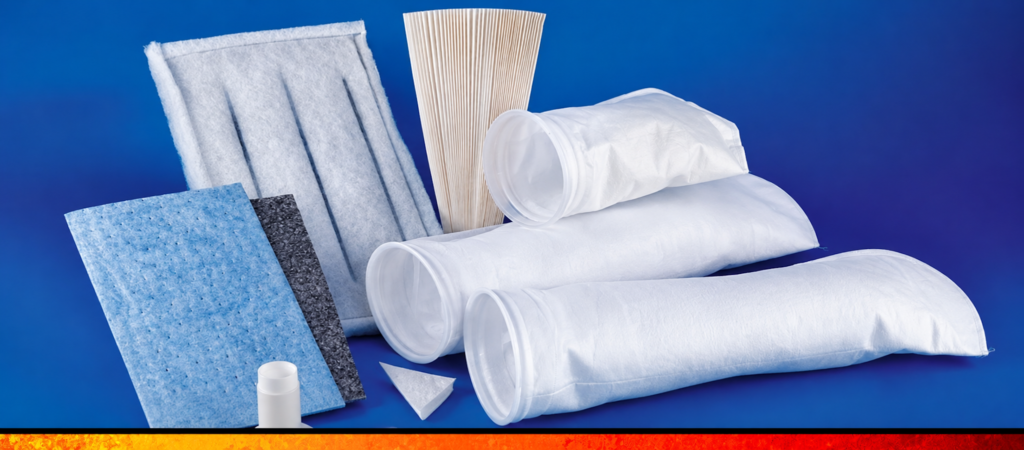
Filter performance depends on controlling the flow path, so air or liquid moves through the filtration media, not around it. Gaps in seams, holes created during assembly or weak connections between filter components provide pathways around the media and undermine the performance of the finished product. That makes joining technology an important consideration in filter manufacturing, particularly for pleated, HVAC, HEPA and specialty filters made with synthetic media.
Ultrasonic bonding offers manufacturers a way to join compatible synthetic materials without needles, thread or adhesives. Instead, the process uses high-frequency mechanical vibrations to create localized heat that fuses the materials at the bond area. The result is a clean, repeatable seam without stitch holes or the gaps that uneven adhesive application can cause.
Even highly efficient media cannot prevent contaminants from bypassing gaps in the filter assembly. For example, pleated mechanical HEPA air filters are designed to remove at least 99.97% of airborne particles measuring 0.3 microns in diameter. That makes seam and seal integrity especially important in high-efficiency filter construction.
How Does Ultrasonic Bonding Work for Filter Media?
During the ultrasonic textile bonding process, the filter materials are held between an ultrasonic horn and an anvil or pattern wheel. Vibrations passing through the material create rapid localized heating, causing thermoplastic fibers to soften and fuse. Once the ultrasonic energy stops, the materials solidify into a bond. Because heat is concentrated at the bond area instead of being applied broadly to the assembly, the process creates a finished seam quickly without glue, thread or other joining consumables.
The technology works particularly well with nonwovens and synthetic filter media. Sonobond systems bond fully synthetic media or blends containing up to 40% natural fibers, depending on the material and application. Suitable thermoplastics include polyester, nylon and polypropylene, and felted filter media are particularly well suited to ultrasonic bonding.
Eliminating Needle Holes and Adhesive Gaps
Sewing and adhesive bonding are two common methods for assembling filters. Both can be effective, but ultrasonic bonding eliminates some of the limitations of sewing in suitable applications.
Sewing physically penetrates the material. Each needle penetration creates a small opening in the filter assembly. Depending on the filter design and application, those openings may create potential leakage paths that then require additional sealing.
Adhesives eliminate needle holes but add another material to the manufacturing process. Adhesive coverage must be controlled to achieve a consistent seal, and manufacturers may also need to accommodate application equipment, curing or cooling time and additional handling.
Ultrasonic bonding fuses compatible materials together without these additional joining materials.
For filter manufacturers, this means:
- No needle perforations in the bonded seam;
- Reduced potential for gaps caused by inconsistent adhesive application;
- Clean, sealed edges that resist fraying; and
- Repeatable bonds when process parameters are properly established.
Why Ultrasonic Bonding is Well Suited to Pleated Filters
Pleated filters present an important manufacturing challenge. They need to provide a large surface area of filtration media in a compact space while maintaining the geometry and integrity of the filter pack. Joining processes therefore need to secure the media without unnecessarily damaging it or interfering with the filter’s intended airflow.
Ultrasonic bonding seals compatible synthetic filter media while using only a narrow area for the bond. Specialized tooling also accommodates pleated filter geometries.
Selecting the Right Bonding Method for Different Filter Designs
Filter manufacturing encompasses products with significantly different shapes, materials and production volumes. The bonding process and tooling need to match the filter’s construction.
- Continuous rotary bonding is useful when a manufacturer needs to create a continuous seam or simultaneously seal and trim synthetic filter media. Sonobond’s SeamMaster® systems, for example, operate much like conventional sewing machines but use ultrasonic energy instead of a needle and thread. Interchangeable tooling accommodates different seam patterns and geometries.
- Plunge bonding is better suited to defined bond areas or larger, thicker and multilayer assemblies. Sonobond’s PlungeBonder™ is used for applications such as box-style filters and sealing filter bag ends.
- Circumferential bonding is applied where a filter bag must be connected to a rigid collar or ring. Sonobond’s RingMaster™, for example, creates a 360-degree bond between heavy felt filter bags and plastic collars without stitching or adhesives.
The best approach depends on the filter’s materials, construction and production requirements; no single bonding method suits every application.
Ultrasonic Bonding Simplifies Filter Production
Ultrasonic bonding streamlines filter production by combining operations that might otherwise require separate manufacturing steps. Continuous rotary systems, for example, bond while cutting, trimming or slitting synthetic materials. Ultrasonic slitting also seals the cut during the processing, helping to prevent fraying and unraveling.
Combining these operations reduces handling between production stages and can improve throughput. SeamMaster® systems bond synthetic fabrics as much as four times faster than conventional sewing and up to 10 times faster than some heat-sealing and adhesive processes. Actual production rates depend on the materials, bond design and application.
Cleaner Assembly With Fewer Added Materials
Because ultrasonic bonding joins compatible materials directly, it reduces the need for added materials in the finished filter assembly. Manufacturers can eliminate thread and, in suitable applications, adhesives from the joining process.
Using fewer consumables simplifies inventory management and reduces waste associated with excess adhesive, trimmed thread or unsuccessful application. It also supports cleaner assembly, which may be especially valuable in filtration products where loose thread, adhesive residue or other added materials are undesirable.
In liquid filtration applications, for example, eliminating thread also removes a component that could potentially loosen and enter downstream equipment.
Designing Ultrasonic Bonding Into the Filter Manufacturing Process
Consider ultrasonic bonding as part of filter design rather than as a last-minute substitute for sewing or adhesive. Evaluate several factors early in the filter manufacturing process, including material composition, media thickness, number of layers, seam location, bond width, filter geometry and required bond strength. The tooling design also matters. Different pattern wheels, horns, fixtures and bond geometries change how ultrasonic energy is delivered to the material.
Testing is an important step before moving to full-scale production. Sample bonding enables manufacturers to evaluate whether their specific media and construction achieve the required seam quality and strength. This testing is particularly valuable for specialized filtration products, where materials or geometries may differ substantially from standard HVAC or pleated filter configurations.
Strong Filter Performance Starts With the Entire Assembly
Weaknesses in a filter assembly can allow bypass or premature failure, regardless of media efficiency. For manufacturers working with compatible synthetic materials, ultrasonic bonding creates consistent, leak-resistant seams while reducing the number of materials and production steps required for assembly.
Whether the application involves pleated HVAC and HEPA filters, filter bags or specialty filtration products, matching the joining process to the application helps manufacturers support filtration performance and production efficiency.
Contact Sonobond to learn more about ultrasonic bonding for nonwovens, textiles and filtration products.
Frequently Asked Questions About Ultrasonic Bonding in Filter Manufacturing
Can ultrasonic bonding be used for filter manufacturing?
Yes. Ultrasonic bonding can be used to assemble filters made from compatible synthetic and nonwoven materials. Applications include pleated filters, HVAC and HEPA filters, filter bags, box filters and specialty air, liquid and gas filtration products.
How does ultrasonic bonding help prevent filter leaks?
Ultrasonic bonding fuses compatible materials together without piercing the media with a sewing needle. This eliminates stitch holes at the bonded seam and avoids gaps that can result from inconsistent adhesive application. A continuous bond helps to maintain the intended air or liquid flow path through the filter media.
Does ultrasonic bonding require adhesives?
No. The process uses high-frequency mechanical vibrations to generate localized heat and fuse compatible thermoplastic materials, so glue is not required to create the bond.
What filter materials can be ultrasonically bonded?
Many synthetic materials can be ultrasonically bonded, including polyester, polypropylene and nylon. Sonobond systems bond fully synthetic materials and blends containing up to 40% natural fiber, depending on the specific material construction and application.
What types of filters can be manufactured with ultrasonic bonding?
Applications include HVAC filters, HEPA filters, pleated filters, box-style filters, filter bags and specialty filters for air, liquid and gas filtration. The appropriate ultrasonic equipment and tooling depend on the filter’s materials and geometry.