
Building Better Seams: Ultrasonic Bonding Best Practices for Textiles Manufacturing
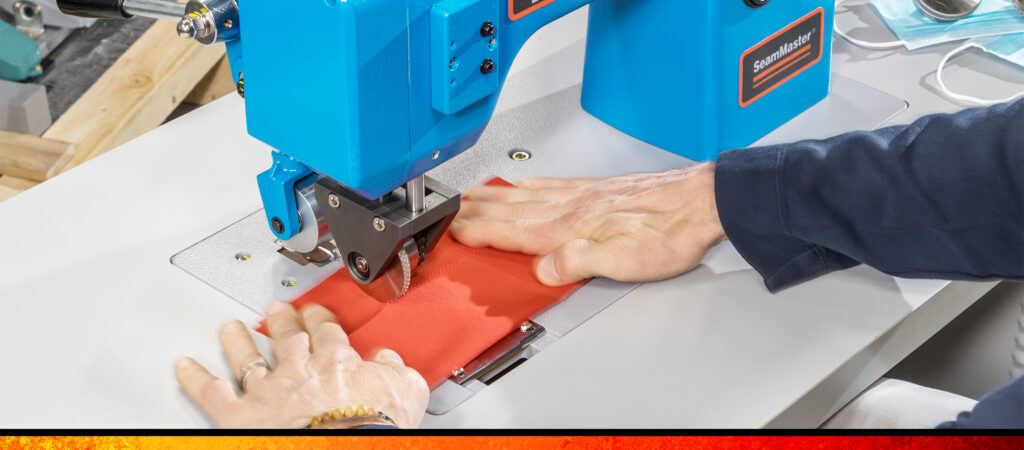
Manufacturers of textile and nonwoven products must deliver materials that are strong and efficient to assemble. From medical garments and PPE to filters, protective gear, automotive components and engineered fabrics, the finished product must function reliably in demanding environments. The quality of the bonded areas directly affects the performance of the end product. By designing seams with ultrasonic bonding in mind, manufacturers can improve production and quality of durable textiles and nonwovens.
Advantages of Ultrasonic Bonding for Performance Textiles
Traditional joining methods such as sewing, adhesives and heat sealing can be effective for certain applications. However, they can also introduce limitations in performance-focused textiles manufacturing. Sewing creates needle holes that may compromise barrier protection or allow liquid and air penetration. Adhesives can leave gaps and create cleanliness concerns. Heat sealing can cause damage to the material around the seam. These issues can lead to fraying and inconsistent product performance.
Ultrasonic textile bonding offers an alternative approach. In this process, high-frequency vibrations are directed at the fabric layers as they pass under a horn. The materials are heated and fused, making a finished seam or sealed edge that resists fraying, unraveling and separation.
Best Practice #1: Choose Materials That Can Bond Reliably
Material selection is one of the most important factors in successful ultrasonic textile bonding. Even the best equipment configuration and seam design will not produce consistent results if the materials are not compatible with the process. Because ultrasonic bonding relies on localized heat and pressure to fuse fibers together, materials must be able to soften, flow and re-solidify at the bond interface.
Before designing the seam, manufacturers should confirm the fiber composition of every material layer. Prioritize synthetic materials or blends with up to 40% natural fibers when designing products for ultrasonic bonding.
Commonly suitable materials include acrylics, acetates, polyester, nylon, polypropylene, spandex and PVC. These materials respond well to ultrasonic energy because they can melt or soften just enough to form a secure bond. In general, the higher the synthetic content, the easier it is to cut and seal with ultrasonic energy.
Many dissimilar materials can be bonded successfully, but their melt temperatures should be closely matched. As a general guideline, the melt temperature difference between the materials should not exceed 50 °F.
Natural-fiber blends should be tested carefully. Cotton, wool and other natural fibers do not melt in the same way thermoplastics do, so they cannot fuse as readily under ultrasonic energy. If the natural-fiber content is too high, the bond may not seal the edge properly.
Manufacturers should also evaluate coatings, laminates, films and multilayer constructions because they can change how ultrasonic energy moves through the material. Multilayer assemblies may also require special attention to make sure energy reaches the intended bond interface.
Best Practice #2: Engineer the Seam for the Application
In textiles manufacturing, seam design starts with the end use of the product. Will the seam need to resist liquid penetration? Maintain air filtration performance? Prevent fraying? Hold up under repeated handling? These requirements should guide the seam geometry, bond pattern and equipment setup from the beginning.
Seam design best practices include:
- Avoiding unnecessary seam bulk, which makes it harder to achieve even pressure and consistent ultrasonic energy transfer.
- Using seam paths that allow steady contact between the material and the ultrasonic bonding machine’s horn and anvil or pattern wheel.
- Matching the bond pattern to the product’s stress points to distribute tension more evenly.
- Selecting an ultrasonic bonding machine that can bond, trim and seal in one pass to reduce production time and improve edge consistency.
Best Practice #3: Match the Equipment Configuration to the Production Need
Choosing the right ultrasonic bonding equipment is just as important as selecting the right material or seam design. Different production goals require different bonding configurations. A machine that works well for long, continuous seams may not be the best choice for thick multilayer parts, large bond areas or highly customized filter assemblies.
Rotary/Continuous Bonding Configurations
Rotary or continuous ultrasonic bonding systems are well suited for longer seams, high-throughput production, hand-guided work, curves, trimming and edge sealing. In this type of setup, the material passes between an ultrasonic horn and a rotating anvil or pattern wheel. As the material moves through the bonding area, ultrasonic energy is applied continuously, creating a consistent seam or finished edge.
Continuous ultrasonic bonding can improve textiles manufacturing speed and consistency for products like PPE, medical garments, filtration media, protective covers, dry bags and engineered textile assemblies.
- Pattern Wheels: Pattern wheels play an important role in rotary bonding. Depending on the design, they can create stitch-like patterns, embossing, slitting, sealing or edge trimming. The pattern affects not only the look of the seam, but also its strength, flexibility, barrier properties and resistance to fraying or unraveling. Therefore, the wheel design should be selected based on the product’s performance requirements, not appearance alone.
- Automation: Manufacturers should also consider whether the process will be operator-guided, semi-automated or fully automated. Operator-guided machines can be valuable for short runs, complex shapes, curves, prototypes or products that require manual control. Automated systems may be better for high-volume production where speed, repeatability and consistent seam placement are priorities.
- Clearance: Clearance is another important consideration. Bulky materials and multilayer assemblies may require additional space between the wheel, horn and work surface. Adequate clearance helps operators maneuver the product more easily and maintain consistent contact.
Plunge or Press-Style Bonding Configurations
Plunge or press-style ultrasonic bonding configurations are often better suited for spot bonds, larger bond areas, thick materials, multilayer assemblies and filter bags. Rather than creating a continuous seam as the material moves through the machine, a plunge-style system applies ultrasonic energy to a defined area while the material is held in place.
This setup allows for controlled pressure and dwell time. The machine can apply a specific amount of force for a set period, helping manufacturers achieve repeatable bonds in challenging materials or complex assemblies. Plunge bonding can also be useful when the product geometry makes continuous feeding difficult.
Best Practice #4: Customize Tooling and Bond Patterns
Tooling is central to ultrasonic bonding performance. The pattern wheel, horn, anvil or custom fixture helps to control where the ultrasonic energy is concentrated, how pressure is applied and how the finished seam or edge performs.
For rotary bonding, pattern wheels should be selected based on the product’s performance needs. Manufacturers should avoid overly aggressive patterns that damage the material. The goal is to create enough fusion for a durable bond without weakening the surrounding textile or nonwoven.
Custom wheels and tooling may be needed for unique geometries or demanding applications. They can help control seam placement and improve repeatability.
During development, manufacturers should validate bond width, pattern density and edge trim distance. For multilayer products, tooling should also be tested with the full material stack to ensure ultrasonic energy reaches the intended bond interface evenly.
Sustainability and Cost Advantages of Ultrasonic Bonding
Sustainability in textiles manufacturing is often tied directly to material choices, production efficiency, waste reduction and the number of consumables required to make a finished product. Ultrasonic bonding supports textiles manufacturing sustainability initiatives by eliminating thread, adhesive and chemical binders. The process also reduces material consumption, production waste and energy usage compared with conventional joining methods.
From a cost perspective, the benefits of ultrasonic bonding are closely connected to process efficiency. Lower consumable usage, fewer secondary operations, reduced rework, faster production and cleaner seams can all contribute to improved manufacturing economics. The exact savings depend on the product, material, production volume and current joining method. Calculating the total cost should be evaluated across the full process, not just the price of the bonding equipment.
How Sonobond Supports Durable Ultrasonic Textile Bonding
For manufacturers focused on durable ultrasonic textile bonding, the right equipment and tooling can help turn good seam design into consistent production results. Sonobond Ultrasonics offers textile and nonwovens bonding systems designed to create strong, clean, repeatable seams and edges without thread, glue or other consumables.
SeamMaster® Ultrasonic Bonding Machines
SeamMaster® ultrasonic bonding machines are designed for manufacturers that need fast, continuous bonding, sealing, trimming, slitting, embossing or stitch-like seam patterns in synthetic fabrics and engineered textiles. They operate much like traditional sewing machines, which can make them easier for production teams to adopt.
SeamMaster machines can bond up to four times faster than traditional sewing and up to ten times faster than heat sealing and adhesive machines. This makes them a strong option for manufacturers looking to improve throughput while reducing consumable use and secondary finishing steps.
Interchangeable pattern rollers allow manufacturers to adapt the bond to the product’s needs. Depending on the application, the machine can be configured for sealing, trimming, slitting, embossing or stitch-like bonding. Sonobond engineers can develop custom pattern wheels for specialized seam designs, product geometries or performance requirements.
PlungeBonder™ Ultrasonic Textile/Filter Bonder
For larger, thicker, hard-to-bond or multilayer products, Sonobond’s PlungeBonder Ultrasonic Textile/Filter Bonder is designed for applications that require controlled bonding over a defined area rather than a continuous rotary seam. This equipment is useful for textiles manufacturers working with challenging assemblies where material thickness, part size or geometry may make continuous bonding less practical.
PlungeBonder is especially valuable in filtration applications, including filter bag and box-style filter production. By using ultrasonic energy instead of adhesives, manufacturers can create clean, consistent bonds while reducing glue-related gaps, consumables and curing steps.
Ready to design stronger, cleaner, more durable textile bonds? Contact Sonobond Ultrasonics to find the right ultrasonic bonding solution for your textiles manufacturing goals.
Frequently Asked Questions About Ultrasonic Textile Bonding
1. What is ultrasonic textile bonding in textiles manufacturing?
Ultrasonic textile bonding is a joining process that uses high-frequency vibrations to fuse compatible synthetic fabrics and nonwovens. Instead of relying on thread, glue or chemical binders, ultrasonic bonding creates localized heat in the bond area to form a strong seam or sealed edge. In textiles manufacturing, this process can help improve seam durability, reduce fraying and support cleaner production for performance textile products.
2. How does ultrasonic bonding improve textile seams?
Ultrasonic bonding improves textile seams by creating clean, sealed bonds without needle holes, adhesive gaps or loose thread. This is especially useful for products that require barrier protection, edge integrity or resistance to fraying and unraveling. For manufacturers making PPE, medical garments, filters, dry bags, protective covers or engineered fabrics, ultrasonic textile bonding can help improve product performance and production consistency.
3. What materials are best for ultrasonic textile bonding?
Ultrasonic textile bonding works best with synthetic or thermoplastic materials because they can soften and re-solidify at the bond interface. Commonly suitable materials include acrylics, acetates, polyester, nylon, polypropylene, spandex and PVC. Blended fabrics may also be used, but higher synthetic content typically improves cutting, sealing, and bonding results.
4. Can ultrasonic bonding be used for nonwoven materials?
Yes. Ultrasonic bonding is commonly used for nonwoven materials in applications such as medical garments, PPE, hygiene products, filtration media and technical textiles. Because the process can bond and seal without thread or adhesives, it is well suited for nonwoven products that require clean seams, sealed edges and efficient high-volume production.
5. Is ultrasonic bonding better than sewing for PPE and medical garments?
For many PPE and medical garment applications, ultrasonic bonding offers advantages over sewing because it does not create needle holes. This can help support barrier integrity in products that need to resist liquid, air, or particle penetration. Ultrasonic bonding can also reduce added materials by eliminating thread and adhesives, making it useful for disposable nonwovens, medical textiles and protective apparel.
6. Can ultrasonic bonding replace adhesives in filter manufacturing?
In many compatible filter manufacturing applications, ultrasonic bonding can reduce or eliminate adhesives. This helps avoid glue gaps, curing time, chemical binders and added consumables. Ultrasonic bonding is especially useful for filtration products where clean assembly and reliable edge sealing are important, including pleated filters, HVAC filters, HEPA filters, liquid filters and automotive or aerospace filtration media.
7. What is the difference between rotary ultrasonic bonding and plunge bonding?
Rotary ultrasonic bonding is used for continuous seams, edge sealing, trimming, slitting, curves and high-throughput production. It is often a good fit for synthetic fabrics, nonwovens, PPE, dry bags, protective covers and engineered textile assemblies.
Plunge bonding, also called press-style ultrasonic bonding, applies ultrasonic energy to a defined area while the material is held in place. It is often better for spot bonds, large bond areas, thick materials, multilayer assemblies, filter bags, box-style filters and applications that require custom tooling.
8. Why are pattern wheels important in ultrasonic bonding machines?
Pattern wheels help determine how an ultrasonic bonding machine forms the seam or sealed edge. Depending on the wheel design, manufacturers can create stitch-like patterns, embossing, slitting, sealing, trimming or edge finishing. The pattern affects seam strength, flexibility, barrier performance, appearance and fray resistance, so it should be selected based on the product’s end-use requirements.
9. How does ultrasonic bonding support sustainable textiles manufacturing?
Ultrasonic bonding supports sustainable textiles manufacturing by reducing the need for thread, adhesives, chemical binders and other consumables. It can also reduce waste from trimming, rework and secondary finishing steps. Because ultrasonic bonding creates localized heat at the seam rather than heating a larger area, it may also reduce energy use compared with some conventional joining methods.
10. How can Sonobond help with ultrasonic textile bonding applications?
Sonobond Ultrasonics helps manufacturers evaluate materials, seam designs, tooling and equipment configurations for ultrasonic textile bonding. SeamMaster® ultrasonic bonding machines are designed for fast, continuous bonding, sealing, trimming, slitting, embossing and stitch-like seam patterns in synthetic fabrics and engineered textiles. PlungeBonder™ is designed for larger, thicker, hard-to-bond or multilayer products, including filter bag and box-style filter applications.