
Beyond Solder and Crimp: When Ultrasonic Welding is the Best Choice
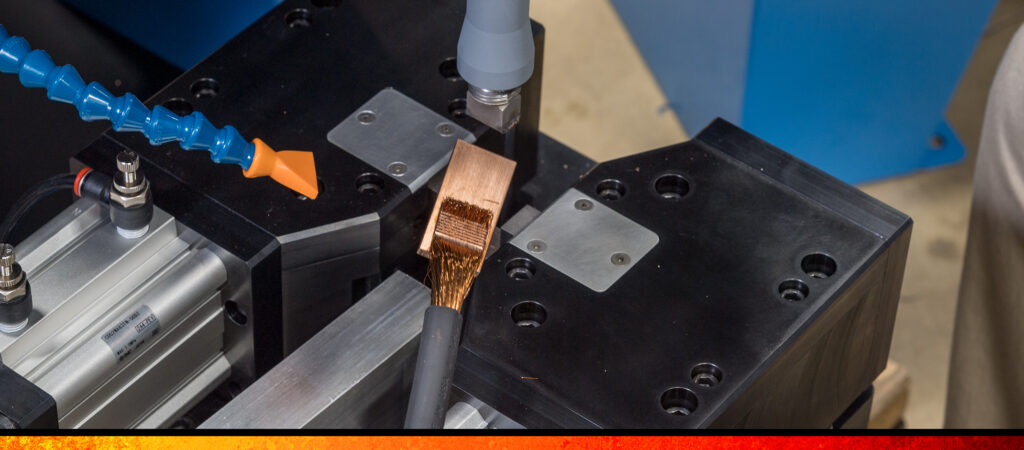
Manufacturers have several choices when it comes to joining metals and electrical assemblies. Soldering, crimping, resistance welding and mechanical fastening are widely used, but they don’t deliver consistent results in terms of strength, conductivity, repeatability and cleanliness.
In many cases, ultrasonic welding is a better alternative. In applications such as wire splicing, spot welding and wire-to-terminal assembly, the advantages of ultrasonic welding include stronger, neater and more reliable bonds without the drawbacks associated with heat, filler materials or added consumables.
What is Ultrasonic Metal Welding?
Ultrasonic welding is a solid-state joining process that directs high-frequency vibrations at two components, which are clamped together. It creates a rapid buildup of heat that produces a weld in only a few seconds without melting the base materials.
Because the metals do not melt, manufacturers can avoid some of the common challenges associated with conventional joining methods, including thermal distortion, inconsistent fusion and the need for additional joining materials. The result is a precise, repeatable weld with long-term reliability and excellent electrical and thermal conductivity.
Ultrasonic metal welding is especially effective for nonferrous metals, including aluminum, brass, copper, most precious metals and nickel alloys. Another advantage of ultrasonic welding is that it can also join many dissimilar metal combinations, making it a highly versatile manufacturing option.
Ultrasonic Welding vs. Soldering
Soldering remains a common joining method in electronics and electrical assembly, but it is not always ideal for every application. Because soldering depends on heat and filler material, it can introduce added process complexity and potential variability.
In contrast, ultrasonic welding creates a bond without external heat, current, solder or flux, which can be especially beneficial when manufacturers want to:
- Protect heat-sensitive components
- Eliminate consumables
- Improve process consistency
Ultrasonic welding forms a solid-state metallurgical bond rather than relying on melted filler material, resulting in stronger, more conductive connections.
Soldering still has its place, but for many wire, tab, terminal and foil applications, ultrasonic welding offers a cleaner, faster, and more reliable alternative.
Ultrasonic Welding vs. Crimping
Crimping is widely used for wire terminations and electrical connections, but it requires additional components and tooling. Over time, crimped wires may also be more vulnerable to loosening or performance issues in demanding operating conditions.
One of the major advantages of ultrasonic welding over crimping is that it does not require additional materials. It can join wire-to-wire or wire-to-terminal assemblies without fillers or crimping tools, while producing a secure, durable bond.
For industries such as automotive, aerospace, marine, agricultural and industrial manufacturing, ultrasonic welding provides:
- Long-term reliability
- Improved performance in harsh environments
- Protection from vibration and stress
- Reduced maintenance and failure risk
Top Advantages of Ultrasonic Welding
The advantages of ultrasonic welding come from its solid-state process, which delivers a unique combination of strength, conductivity, speed and process cleanliness.
No heat, current or filler materials required
As noted above, ultrasonic metal welding does not require heat, electrical current, solder, flux or filler materials. That eliminates the need for many consumables while also reducing the risk of damaging heat-sensitive components. For manufacturers, that can mean a simpler process, lower material costs and fewer variables to manage during production.
Strong, precise, repeatable bonds
Because there is no melting or slipping during the ultrasonic welding process, manufacturers maintain consistent weld quality from part to part. This repeatability is especially valuable in production environments where process stability and consistent outcomes are critical.
Excellent electrical and thermal conductivity
Because ultrasonic welds create metal-to-metal bonds without filler materials, the finished bond offers excellent electrical and thermal conductivity. That makes the process especially well-suited for electrical assemblies where low resistance and strong performance matter.
Join tinned or oxidized metals without pre-cleaning
Ultrasonic welding can join tinned or oxidized metals in a single pulse, often without any need for pre-cleaning. Sonobond systems can also weld tinned copper wires without removing the tin coating. These advantages can help manufacturers reduce labor, eliminate extra process steps and improve throughput.
Weld thin, thick and dissimilar materials
Ultrasonic metal welding can join thin-to-thin and thin-to-thick materials, as well as many similar and dissimilar nonferrous metals. That flexibility is especially useful in battery, electronics and electrical assembly applications, where engineers often work with mixed materials and delicate components.
Clean, efficient operation
Unlike some conventional joining methods, ultrasonic welding does not produce arcs, sparks or fumes. It is also energy efficient and ideal for automated production environments. For manufacturers looking to reduce mess, improve safety and simplify integration into assembly lines, these are compelling advantages.
Common Applications for Ultrasonic Metal Welding
Ultrasonic metal welding is widely used in applications involving wires, tabs, terminals, foils and electrical connections.
Wire splicing
Wire splicing is one of the most common applications for ultrasonic welding. It is used extensively in wire harness production across industries such as automotive, marine, agricultural equipment, aerospace, electronics and industrial manufacturing. Ultrasonic wire splicing produces strong, low-resistance connections without melting the wire, creating sparks or causing arc damage.
Spot welding
Ultrasonic spot welding is often used for connecting wires or cables to terminals, creating reliable electrical connections that can withstand vibration and stress. It is also well suited for connector-to-cable assemblies, battery tab-to-terminal connections, tabs to solar cells, and bus bar-to-wire or -terminal joins.
Wire-to-terminal welding
For applications involving lithium-ion batteries, foil-wound capacitors, thin aluminum or copper foil and electrical contacts, ultrasonic wire-to-terminal welding can provide a strong, precise, and repeatable solution.
Battery and energy storage applications
Ultrasonic welding is particularly useful in battery manufacturing because it can join multiple layers of delicate anode and cathode foils to tabs and terminals without tearing them. This makes it highly relevant for lithium-ion and NiMH batteries used in electric vehicles, charging stations and high-capacity energy storage systems.
Why Ultrasonic Welding Equipment Matters
Not all ultrasonic welding systems perform the same. Equipment design directly affects weld quality, downtime and maintenance costs.
For example, Sonobond’s Wedge-Reed System is specifically engineered for metal welding. It applies force directly above the weld area, producing stronger, more consistent results.
By contrast, lateral drive systems apply force farther from the weld point, which can reduce effectiveness, especially in challenging applications like welding oxidized or tinned materials.
Sonobond Solutions for Ultrasonic Metal Welding
When manufacturers decide ultrasonic welding is the right choice, selecting the best equipment is just as important as choosing the process itself. Sonobond offers several ultrasonic metal welding solutions designed to support a wide range of electrical and metal joining applications.
WeldMAX™
The WeldMAX™ ultrasonic spot welder is Sonobond’s most powerful system, delivering up to 10,000 watts of output power to weld a wide range of metal assemblies. WeldMAX is used for heavy-gauge wire-to-wire and wire-to-terminal assembly, electrical bus bar fabrication and other electrical assemblies, including tinned stranded wire assemblies. Most welds are completed in under three seconds, depending on material type and thickness.
SonoWeld®
The SonoWeld® ultrasonic metal welding system is a user-friendly, microprocessor-controlled solution that delivers strong, consistently accurate spot welds and wire-to-terminal welds. It can weld oxidized or tinned metals in a single pulse without pre-cleaning and is also designed to handle multiple layers and delicate foils.
SonoWeld is particularly well suited for battery applications, including welding anode and cathode foils as thin as seven microns to battery tabs and terminals for lithium-ion and NiMH batteries. The system can also join multiple stranded wires from flat flexible circuits to multi-connection terminals in a single pulse.
SpliceRite™
SpliceRite™ ultrasonic wire splicers are built to deliver strong, clean and consistent wire connections in demanding environments. Used in automotive, aerospace, electronics and industrial applications, SpliceRite systems help manufacturers produce high-strength wire splices with minimal energy consumption. They also join oxidized or tinned wire bundles in one pulse without pre-cleaning.
Conclusion
Soldering, crimping and other traditional joining methods have value in manufacturing, but they are not always the best choice. When applications require strong, precise, highly conductive and repeatable metal bonds, ultrasonic welding often offers clear benefits.
From joining tinned or oxidized metals without pre-cleaning to producing durable wire splices and battery connections without heat or filler materials, the advantages of ultrasonic welding make it an attractive option for a wide range of industries and applications.
For manufacturers evaluating the best joining method for wires, terminals, tabs, bus bars, foils and other electrical assemblies, Sonobond’s ultrasonic metal welding solutions offer a reliable path to cleaner processes, stronger bonds and more consistent results.
Contact Sonobond to learn which ultrasonic welding system is best suited for your materials, application requirements and production goals.
Ultrasonic Welding FAQs
1. What are the main advantages of ultrasonic welding?
Ultrasonic welding creates strong, precise, solid-state bonds without heat, solder, flux or filler materials. It also offers excellent electrical conductivity, repeatability and fast cycle times.
2. When is ultrasonic welding better than crimping?
Ultrasonic welding is often the better choice when manufacturers need a more secure, durable connection without added materials or crimping tools, especially in applications exposed to vibration or stress.
3. Can ultrasonic welding join tinned or oxidized metals?
Yes. One of the key benefits of ultrasonic metal welding is its ability to join tinned or oxidized metals in a single pulse, often without pre-cleaning.
4. What materials can be joined with ultrasonic metal welding?
Ultrasonic metal welding can join nonferrous metals such as aluminum, brass, copper, nickel alloys and many precious metals, including some dissimilar metal combinations.
5. What applications are best suited for ultrasonic welding?
Common applications include wire splicing, spot welding, wire-to-terminal joining, battery tab welding, bus bar connections and other electrical assemblies where strength and conductivity matter.