
Engineering Efficiency: How Ultrasonic Welding Boosts Production and Quality
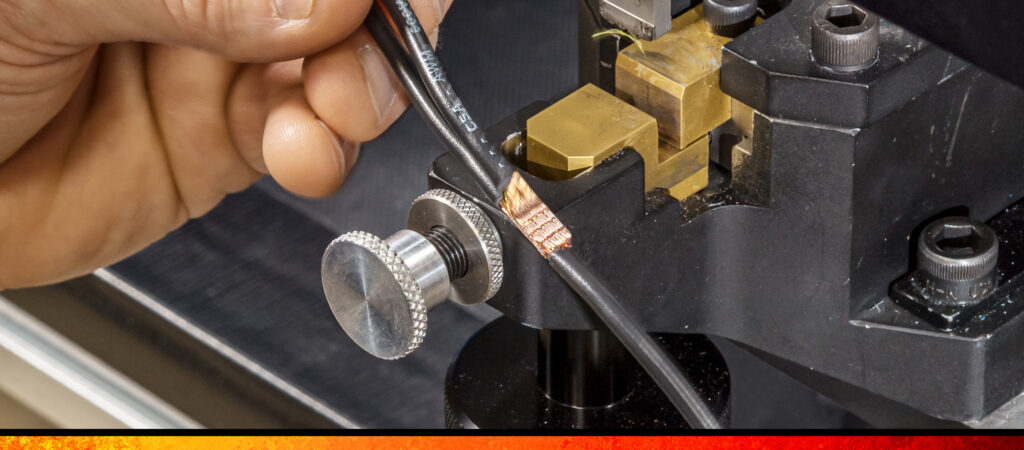
Manufacturers are under constant pressure to increase output while maintaining strict quality requirements. As product designs become more complex and performance expectations rise, joining processes that lack efficiency can limit productivity and overall manufacturing reliability.
Ultrasonic metal welding systems address these challenges because they deliver precise, repeatable weld performance with improved process control. Read on to learn how ultrasonic welding helps manufacturers achieve higher efficiency while meeting demanding industry specifications.
What is Ultrasonic Welding?
The ultrasonic welding process is a solid-state joining method that uses high-frequency mechanical vibrations to bond materials under pressure. In metal welding applications, these vibrations create controlled friction at the interface of the parts, breaking down surface oxides and allowing the metals to bond at a molecular level. Because the materials are not melted, the weld is formed without added heat sources, adhesives or solder, preserving the original properties of the base metals.
Thermal welding can alter grain structure and introduce distortion, while soldering requires filler materials that may reduce conductivity or long-term reliability. Mechanical crimping depends on deformation alone, which can loosen over time under vibration or thermal cycling.
Central to Sonobond’s ultrasonic metal welding systems is the unique Wedge-Reed system, which ensures consistent amplitude control and uniform energy delivery during each weld cycle. This design enables strong welds across a range of metals and applications..
How Ultrasonic Welding Improves Manufacturing Efficiency
Faster Production Cycles
The ultrasonic welding process enables rapid bond formation, often completing welds in a matter of seconds. Because the process does not rely on bulk heat transfer or extended cooling periods, cycle times are significantly shorter than those associated with conventional joining techniques. This speed supports high-throughput manufacturing environments, particularly in applications such as wire harness production where large volumes of consistent connections are required.
Reduced Downtime and Easier Tool Changes
Manufacturing efficiency is also improved through reduced downtime associated with setup and changeovers. Ultrasonic welding systems are designed to allow fast tooling changes with minimal recalibration. Because the weld process parameters are tightly controlled and repeatable, operators spend less time adjusting equipment and more time producing finished assemblies.
Compatibility With Automation
The ultrasonic welding process is well suited for automated manufacturing due to its precision and repeatability. Modular systems can be integrated into existing production lines or custom equipment. Microprocessor-controlled ultrasonic welders store predetermined weld parameters and apply them consistently during operation, reducing the likelihood of operator error..
Quality Benefits and Reliability Gains
Consistent, High-Quality Welds
The ultrasonic welding process provides strong, reliable welds that maintain excellent mechanical integrity and electrical performance. Because these systems produce solid-state welds through mechanical vibration and pressure rather than melting, the joint forms from metal-to-metal contact. The above-mentioned Sonobond Wedge-Reed design helps to deliver repeatable weld energy and consistent quality from cycle to cycle, even on oxidized and tinned surfaces, supporting durable connections that withstand vibration and thermal stress.
Minimal Thermal and Material Impact
The solid-state ultrasonic welding process supports applications that cannot tolerate thermal degradation of base materials. With ultrasonic welding, the heat generated at the weld interface remains localized and well below the melting point of the base metals, preventing warping or distortion. This low thermal impact contributes to retained material properties such as conductivity and strength without creating brittleness. Localized weld formation also supports joining thin foils and delicate structures without degrading material performance.
Reduction in Rework and Defects
Welds that form reliably on the first attempt mean fewer rejects, less rework and improved overall product quality, resulting in fewer disruptions to production. This dependability in bond formation translates directly into higher overall product quality and fewer assembly line interruptions. This reliability also means higher yield and long-term reliability for assemblies that depend on high-integrity metal joints, such as those in automotive and electrical systems.
Lean Manufacturing and Cost Efficiencies
Elimination of Consumables
The ultrasonic welding process does not require adhesives, fluxes, solder or other joining materials to form a bond. This absence of extra materials reduces material costs and simplifies supply chain management.
Lower Energy and Operational Costs
Because energy in the ultrasonic welding process is delivered directly through mechanical vibration at the join rather than heating large volumes of material, overall energy use is comparatively low.
Reduced Labor and Handling
Rapid weld formation with little need for manual adjustment or additional process steps means operators produce more parts per shift, lowering labor costs per unit.
Sustainable and Safe Manufacturing
Lean manufacturing emphasizes reduced waste and efficient use of resources, which the ultrasonic welding process inherently supports. Because welds occur without added consumables or external heat sources, waste streams such as spent adhesives or solder residues are eliminated. Ultrasonic welding also contributes to safer working conditions by minimizing emissions and contaminants normally associated with heat-based joining methods.
Real-World Manufacturing Applications
Wire Harness Manufacturing
In wire harness assembly, the ultrasonic welding process enables rapid joining of multiple conductors with minimal manual intervention while producing strong, conductive bonds between stranded wires and terminals. This efficiency supports streamlined workflows while maintaining consistent electrical and mechanical performance across production runs.
Battery Assembly
Ultrasonic metal welding is also applied in battery manufacturing to join foil, tabs and terminal connections in lithium-ion and other rechargeable battery types. Dual-head ultrasonic metal spot welders, for example, can weld multiple layers of thin foils to battery tabs in a single pulse, supporting high electrical performance and structural integrity in energy storage applications.
Automotive and Electronics Production
In automotive and electronics manufacturing, the ultrasonic welding process supports high-volume production of metal connections that must meet precise quality standards. Ultrasonic welding systems are used in components such as bus bars, sensor connectors, ignition modules and other electromechanical parts where repeatable weld quality and integration with automated lines are required.
Conclusion
Sonobond Ultrasonics brings decades of engineering expertise to ultrasonic metal welding with systems built around patented technology and application-driven system design. Through its Wedge-Reed system and production-proven designs, Sonobond helps manufacturers achieve process stability and weld quality while improving throughput and long-term reliability.
To learn how the ultrasonic welding process can improve your manufacturing operation, contact Sonobond Ultrasonics to discuss your application or request a system evaluation.